
Aquatic Habitats - SS2 Biology Lesson Note
An aquatic habitat refers to any environment that is primarily or wholly composed of water and supports various forms of life. It includes bodies of water such as oceans, seas, lakes, rivers, ponds, wetlands, and even underground water systems like aquifers. Aquatic habitats can be freshwater or marine, and they can range from flowing water in rivers to stagnant water in ponds. These habitats are home to a wide range of organisms, including fish, amphibians, reptiles, invertebrates, and various types of plants. Aquatic habitats provide essential resources and ecological services, such as food, shelter, breeding grounds, and water purification, making them crucial for biodiversity and the overall functioning of ecosystems.
MAJOR ZONES OF MARINE HABITATS
Marine habitats can be divided into several major zones based on factors such as depth, light penetration, and proximity to the shore. The major zones of marine habitats include:
1. Intertidal Zone: This zone is the area between the highest high tide and the lowest low tide. It experiences regular exposure to air and water, resulting in fluctuating conditions. Organisms in this zone must adapt to changes in temperature, salinity, and wave action. Examples of organisms found in the intertidal zone include barnacles, crabs, and seaweed.
2. Neritic Zone: This zone extends from the low-tide mark to the edge of the continental shelf, which is usually about 200 meters in depth. It is characterized by relatively shallow and well-lit waters, allowing for abundant plant growth. The neritic zone is home to a diverse range of marine species, including fish, coral reefs, and kelp forests.
3. Oceanic Zone: This zone encompasses the open ocean beyond the continental shelf and extends to the ocean floor. It is further divided into different layers based on depth, such as the epipelagic (sunlit) zone, mesopelagic (twilight) zone, bathypelagic (midnight) zone, abyssopelagic (abyssal) zone, and hadalpelagic (trench) zone. The oceanic zone is characterized by deep waters with low nutrient levels, and organisms here have adapted to survive in extreme conditions, including low temperatures and high pressure.
4. Benthic Zone: This zone includes the seafloor or ocean bottom. It can vary greatly in depth, composition, and topography, ranging from sandy or rocky substrates to deep-sea trenches. The benthic zone supports a diverse range of organisms, including bottom-dwelling species like sea anemones, worms, and shellfish.
5. Coral Reefs: Coral reefs are unique and highly diverse marine ecosystems that are formed by the accumulation of calcium carbonate secreted by corals. They are found in warm, shallow waters with clear visibility, typically in the neritic zone. Coral reefs provide habitat for a vast array of marine species and are often referred to as the "rainforests of the sea" due to their high biodiversity.
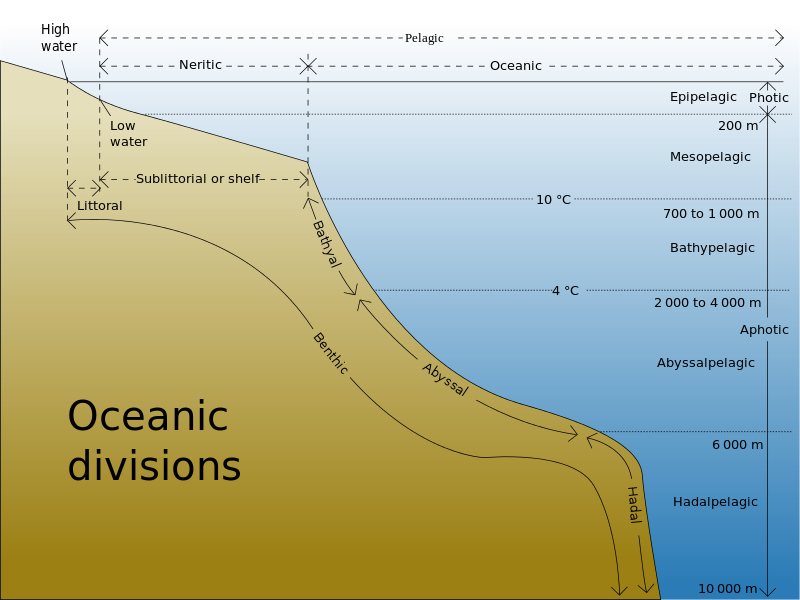
Major zones of the marine habitat (geo.libretexts.org)
These major zones of marine habitats are interconnected and form complex ecosystems that are crucial for marine life and global ecological balance. Each zone supports a unique community of organisms adapted to specific environmental conditions, contributing to the overall biodiversity, and functioning of marine ecosystems.