
Reproductive system in reptiles - SS2 Biology Lesson Note
The reproductive system in reptiles varies across different species but generally shares some common features. Reptiles, including snakes, lizards, turtles, and crocodiles, exhibit various reproductive strategies and mechanisms.
1. Internal Fertilization: Most reptiles practice internal fertilization, where the male deposits sperm inside the female's reproductive tract. This differs from external fertilization seen in many fish and amphibians.
2. Sexual Dimorphism: Reptiles often exhibit sexual dimorphism, with males and females having distinct physical differences. These differences can include variations in body size, coloration, ornamentation, or the presence of specific structures such as horns or crests.
3. Copulation: Reptiles engage in copulation, during which the male transfers sperm into the female's reproductive tract. The exact method of copulation varies among reptile species. Some reptiles have paired intromittent organs, called hemipenes, while others may have other structures to facilitate sperm transfer.
4. Oviparity, Viviparity, and Ovoviviparity: Reptiles employ different reproductive strategies. The majority of reptiles are oviparous, meaning they lay eggs. The eggs are usually shelled and laid in a protected nest or environment. Some reptiles, such as some snakes and lizards, are viviparous, giving birth to live young. In viviparous species, the embryos develop within the female's reproductive tract, receiving nourishment directly from the mother. There are also reptiles that exhibit ovoviviparity, where the eggs are retained within the female's body until they hatch, but there is no direct maternal nourishment.
5. Nesting and Incubation: In oviparous species, reptiles typically construct nests for their eggs. The female may bury the eggs in sand, soil, or vegetation to provide protection and an appropriate incubation environment. The incubation period varies depending on the species and environmental conditions.
6. Parental Care: Some reptiles exhibit parental care to varying degrees. For example, certain crocodile species protect the nests and guard the hatchlings. In turtles, females may bury the eggs and then leave, while others may remain in the vicinity to provide some level of protection.
7. Temperature-dependent Sex Determination (TSD): In some reptiles, including many turtles and crocodiles, the temperature at which the eggs are incubated determines the sex of the offspring. Different temperature ranges produce either male or female individuals.
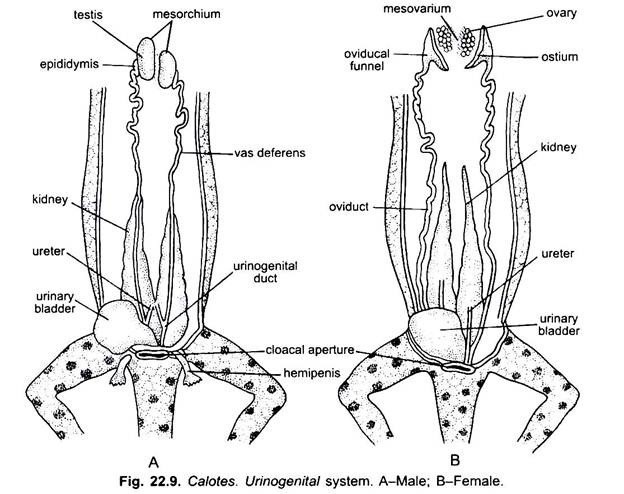
(notesonzoology.com)

(researchgate.net)
Reptiles have evolved diverse reproductive strategies and adaptations that allow them to reproduce successfully in different environments and ecological niches. Understanding the reproductive system of reptiles is crucial for conservation efforts and managing their populations in the face of environmental challenges.